
 Agilent Technologies Inc. has introduced the new Agilent Hydrogen Sensor for the 7890B Gas Chromatography system. The new sensor helps GC users move away from costly helium carrier gas by providing the additional level of security many organizations require in order to use hydrogen. The self-calibrating sensor will automatically execute a safe sequence for the shutdown of the GC system if even a small hydrogen leak is detected, preventing potentially hazardous situations in the laboratory.
The hydrogen sensor is the latest in a series of carrier-gas-saving solutions to help GC users deal with helium supply shortages and rising helium costs. While hydrogen provides the fastest and highest resolution for chromatographic separations, sometimes changing carrier gas from helium is not possible or practical for a particular analysis. In such cases, the Agilent Programmable Helium Conservation Module, with "Sleep-Wake" modes for the Agilent 7890B GC to conserve helium, dramatically increases the length of time a helium tank can be used and reduces the cost of helium in the laboratory.
"Because laboratories face increasing supply-chain constraints and operating costs, it is our priority to develop products that provide economical operation," said Agilent's Jason Ashe, GC product manager. "We also work with our customers to develop a wide range of applications and analyzers that use a variety of carrier gases. These allow for immediate success implementing pre-optimized methods in the laboratory, significantly reducing the time-to-first-sample."
To further reduce gas chromatography labs' reliance on helium, Agilent provides alternate carrier gas solutions to help customers further decrease consumption or migrate to alternate gases. Helium conservation eliminates the need for method revalidation-a major hurdle faced by laboratories that switch to alternative carrier gases-and can reduce helium consumption by up to 90 percent.
Nike Air Max 90 Women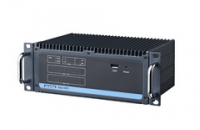 Advantech’s new ECU-1871 is Intel Atom D510 Energy Controller with 2 x LAN, 3 x COM, IRIG-B,and it has been designed to be the most flexible energy controller available. With IEC-61850 compliance, the ECU-1871 is a highly reliable, flexible and stable controller which makes it ideal for all power automation and renewable energy needs.
 The Siemens Industry Automation Division has developed narrow IO modules with a width of just 25 millimeters (mm) for the Simatic ET 200MP distributed I/O. This means that up to 30 modules can be mounted on a standard mounting rail of 830 mm. The new modules can be combined with the 35-mm modules of the same design which are already established on the market. The new portfolio of 25-mm modules for Simatic ET 200MP includes the following digital input and output modules: DI 16x24VDC BA, DI 32x24VDC BA, DQ 16x24VDC/0.5A BA and DQ 32x24VDC/0.5A BA, as well as the mixed module DI/DQ 16x24VDC/16xDC24V/0.5A BA.
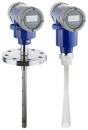 Invensys, a leading supplier of state-of-the-art industrial software, systems and control equipment to the world’s major industries, has introduced its Foxboro Eckardt™ LevelWave Radar Series measurement solution for liquids, including corrosive, sticky or difficult media.
 Acromag expands their line of versatile USB-configured signal conditioning transmitters to include RTD/resistance and potentiometer/thermistor input signals.