
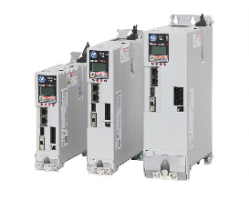
 Rapidly changing consumer demands require machine and equipment builders to reduce development and installation time while increasing machine flexibility. The Allen-Bradley Kinetix 5500 servo drive with integrated safety can help machine builders satisfy those requirements by taking advantage of a single EtherNet/IP network, as well as a common design environment with Rockwell Software Studio 5000 Logix Designer software.
The Kinetix 5500 servo drive with integrated safety builds on the foundation of the recently released Kinetix 5500 servo drive. With the same high-speed coordination to meet demanding motion requirements, the drive uses the EtherNet/IP network for streamlined machine safety functions. End users gain the benefit of improved personnel safety and increased machine uptime in the manufacturing facility.
“Production requirements are constantly changing for end users in the packaging, converting and material-handling industries, meaning their safety requirements may change as well,” said Mike Schweiner, product manager, Rockwell Automation. “Putting safety on the network eases the configuration of and updates to safety functions. This allows machine builders to be very flexible with their design and differentiate themselves in these industries, providing customers the means to more easily react to market changes.”
The EtherNet/IP network allows safety signals to travel via the same wires and IP addresses used for control and motion. This eliminates the need for a hardwired safety system. Reducing overall system wiring saves time and money in installation and removes potential points of failure, resulting in less troubleshooting and downtime.
Machine and equipment builders can more quickly install the drive and provide customers with greater ease of use via the Logix Designer development environment and Allen‑Bradley GuardLogix safety controllers. In addition to motion and control parameters, end users now can configure the safety system within the Logix Designer software. They can unlatch the safe torque off function, program an unlimited number of set points, change safety zoning, and re-use code to maintain system validation – all within a single software application.
Adidas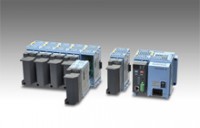 Yokogawa Electric Corporation announces the development of the SMARTDAC+® GM data acquisition system, and will be releasing it to the market on November 17. The SMARTDAC+ GM data acquisition system improves operational efficiency due to its modular design, which facilitates the mounting and removal of modules. In addition, the SMARTDAC+ GM system supports Bluetooth wireless communications for use with handheld mobile devices.
 National Instruments, the provider of solutions that enable engineers and scientists to solve the world’s greatest engineering challenges, today announced a compact solution for high-speed vision applications. The NI CVS-1459RT is a small, rugged vision system with a quad-core Intel Atom processor and two dedicated USB 3.0 ports for USB3 Vision cameras.
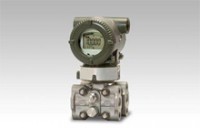 Yokogawa Electric Corporation announces that it has developed a new low-power version of the DPharp EJA-E series differential pressure/pressure transmitter and will release this product in all markets other than Japan and Europe on December 15. The European release will follow in 2015. This new low-power product outputs both 1 to 5 V DC and HART signals and has been developed to meet the specific requirements of oil and gas exploration and production (upstream) applications.
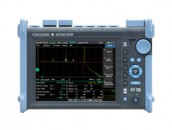 Yokogawa Meters & Instruments Corporation announces that it has developed the AQ7280 series of optical time domain reflectometers (OTDRs) for the installation and maintenance of fiber-optic cables, and will release a total of nine models for this product series on September 29.