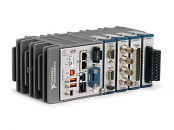
 NI, the provider of solutions that enable engineers and scientists to solve the world’s greatest engineering challenges, today announced the CompactRIO performance controller. This software-designed controller integrates the latest embedded technologies from Intel and Xilinx to deliver unparalleled performance and flexibility, and is fully supported by LabVIEW 2014 and NI Linux Real-Time. It is ideal for advanced control and applications in harsh, industrial environments and provides high-performance processing, custom timing and triggering, and data transfer from modular C Series I/O.
“The LabVIEW RIO architecture breaks the barriers of traditional embedded system design and provides the best off-the-shelf platform to solve any demanding control and monitoring task,” said Jamie Smith, director of embedded systems at NI. “Our platform-based approach gives small design teams the confidence to build innovative embedded systems without wasting development time and cost.”
LabVIEW 2014 with NI Linux Real-Time support lets engineers and scientists use a single, familiar development environment to continue developing their system while taking immediate advantage of increased CompactRIO hardware performance.
“The Intel and NI collaboration allows industrial customers to benefit from the latest processing technologies while meeting their rugged performance requirements,” said Shahram Mehraban, global head of energy and industrial segments at the Intel Internet of Things Group. “By working closely with NI during early phases of product development, we are able to rapidly bring the latest Intel® Atom™ processor to this segment.”
Key Features:
Intel® Atom™ Processor: Close the loop faster, tackle more tasks with the same controller, and process data with more precision, accuracy and speed with this dual-core processor.
Kintex-7 FPGA: Process more channels and implement more complex filtering and control algorithms.
NI Linux Real-Time: Get access to an extensive community of applications and IP with a robust Linux -based real-time OS.
Embedded UI: Implement a local HMI device and use the control system to handle HMI tasks, cutting component costs as well as development and integration time.
Improved Vision Integration: Add USB3 or GigE Vision cameras using NI Linux Real-Time, integrate vision acquisition directly into an application, and use new Vision IP to turn the FPGA into a high-performance vision coprocessor.
Air Jordan Releases 2019

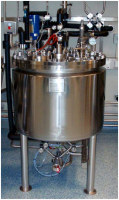 A biopharmaceuticals company needed an accurate and repeatable level measurement of caustic soda solution, which was used to control the biopharmaceutical process of continuous fermentation.
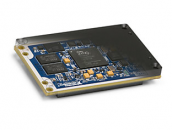 NI (Nasdaq: NATI), the provider of solutions that enable engineers and scientists to solve the world’s greatest engineering challenges, today announced the NI SOM. It combines the Xilinx Zynq All Programmable system on a chip (SoC) with supporting components such as memory on a small PCB and features a complete middleware solution and ready-to-go Linux-based real-time operating system (RTOS) already integrated. The NI SOM gives design teams the customizability of a SOM without the increased time and risk of developing custom software.
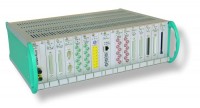 CAS DataLoggers and Jager are proud to introduce a new processor board for ADwin-Pro-II Data Acquisition and Control Systems which has a 64-bit FPU (Floating-Point Unit) for math co-processing. The new Pro-CPU-T12 processor module offers powerful real-time computing and is largely software-compatible to previous versions. With Ethernet support enabling high-speed data transfer, ADwin’s Pro-CPU-T12 module enables standalone data recording in applications where there’s no PC or connection to one. This powerful solution is ideal for satisfying the most demanding applications including physics experiments, vibration monitoring, failure analysis, and high-speed data acquisition.
 Siemens has launched two particularly slim, powerful and energy-efficient power supply units in the shape of the new Sitop PSU8200 5 A and 10 A. The single-phase power supplies, featuring 5 A or 10 A of rated output current respectively, expand the "Sitop modular" product range for high-end 24 V DC applications. Thanks to the wide input voltage ranges from 85 V to 132 V AC, and 170 V to 264 V AC, they can be connected to power systems worldwide. The power supply units are characterized by a slim design (45 mm for the 5 A version and 55 mm for the 10 A version), high efficiency of up to 94 percent, and high overload capability. They are therefore especially suitable for industrial environments with exacting reliability and functionality requirements, such as in car production, or in special-purpose machine manufacturing. They can be used in a temperature range of -25 to +70 degrees Celsius.