
 Case Study by Emerson: Reliance Industries Ltd., ranked 99th on the Fortune 500 list of the world’s major corporations, operates the largest refinery and petrochemical complex. Located in Jamnagar, Gujarat, India, this refinery processes 1.24 million bpd (MMbpd) of crude oil. Largely due to this facility, Jamnagar has emerged as one of the world’s refining hubs. This refinery features the world’s largest crude distillation, fluid catalytic cracking, delayed coking and paraxylene (PX) units. The complex involves the operation of 50 various processing units to produce PX, ethylene, polyethylene, polypropylene, transportation fuels (diesel, gasoline and aviation fuels), and many other products.
Refinery achieve greater measurement accuracy and ultra-reliability with new 3410/3810 Series Electronics that are now available with all Daniel Gas and Liquid Ultrasonic Flow Meters. 3410/3810 Series Electronics offer:
- Speed: Enables operators to detect changing flow dynamics in real time before measurement is adversely affected.
- Reliability: Less components and interconnections simplify troubleshooting and reduce maintenance time.
- Stability: Maintains accuracy and repeatability over the life of the meter.
- Ease of Use: Simplifies installation, configuration and ongoing maintenance of the meter.
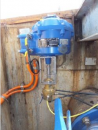 Rotork’s innovative CVA electric control valve actuators are enabling the Sydney Water Corporation in Australia to control the pressure in the city’s water supply network with greatly increased response and accuracy.
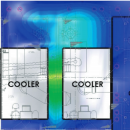 Case Study by Honeywell: Ultrasonic gas leak detection (UGLD) is capable of offering an enhanced mechanism for detecting pressurised gas leaks in applications where more traditional technologies fail to perform effectively due to high natural ventilation rates or excessive vibration. Detection methods such as point and open path IR absorption, catalytic beads and EC cells are dependent on large localised gas clouds forming in order to detect a gas leak. Such gas clouds form well in enclosed areas however, in exposed or elevated areas subject to strong winds leaking gas dilutes quickly with the leak potentially going undetected for long periods of time.
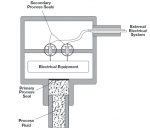 White Paper by Magnetrol: Over the years, well defined standards have been established to address the requirements for process sealing between electrical system and process fluids, where a failure could allow migration of fluid into the electrical system. The primary audience for this are the users of the process operators and facilities and installers of electrical system and instrumentation.
 To optimize plant performance and prevent expensive turbine damage, rapid control is critical for industrial power markets covering multiple energy sources. Maintaining turbine efficiency is an even higher priority today because of lower emission requirements and varying fuel sources due to the increase in unconventional natural gas sources, such as shale. Plant gas sources are primarily composed of methane, but typically there are extensive variations in higher hydrocarbons (C2+) as well. In fact, in some cases, over 18 percent variation has been recorded with fluctuations from 10 percent to 16 percent within one minute. Turbines have to be more flexible and need to present the above criteria over a wide range of loads because gas turbine power plants are often used only for peak loads.