
 National Instruments today announced six new C Series modules designed for NI CompactRIO embedded control systems and NI CompactDAQ modular data acquisition systems. By expanding the C Series platform, NI provides engineers and scientists with new and improved options for a wide variety of embedded control, monitoring and data acquisition applications. Channel counts on the individual modules range from three to 32 channels to accommodate a wide range of system requirements, and the majority of C Series modules work in both the NI CompactDAQ and CompactRIO measurement platforms with no modification.
Quotes
“We rely on National Instruments hardware and software to provide the rugged, distributed control we need for our wind turbine system,” said Jonathan C. Berg, mechanical engineer at Sandia National Laboratories. “The site-wide architecture uses NI VeriStand and the NI 9467 GPS module to choreograph all of the data acquisition and control operations.”
“This is the largest C Series module release in several years, reflecting our ongoing commitment to expanding the NI LabVIEW RIO architecture,” said Jamie Smith, director of industrial embedded marketing at National Instruments. “At NI, we constantly innovate and build upon our systems to help engineers simplify development.”
New C Series Module List
-
· NI 9467 GPS synchronization module – Accurately synchronize a large-scale CompactRIO system with features such as data timestamping and system clock setting.
· NI 9469 chassis synchronization module – Create high-channel-count, distributed systems with custom timing and triggering by linking chassis with a standard Ethernet cable.
· NI 9381 multifunction I/O module – Fit more functionality into a single system with analog input, analog output and digital I/O all in the same module.
· NI 9229 and NI 9239 analog input modules with BNC connectivity – Use the industry-standard BNC connection for applications such as video and RF.
· NI 9220 analog input module with screw terminal or BNC connectivity – Build high-channel-count systems in smaller chassis with 16 channels of simultaneous I/O.
 Siemens Industry Automation Division is launching a versatile weighing module for the Simatic S7-1200. Siwarex WP231 is the first weighing module for this control and is suitable for monitoring filling levels in silos and bins and for use with goods being weighed on platform scales. The new model is intended for industries requiring a high level of measurement accuracy, such as the food and beverage, pharmaceutical and chemical industries. Furthermore it is suitable for use in explosive atmospheres. Ethernet connections and an RS485 RTU interface with Modbus protocol enable it to be operated from a Modbus HMI panel without being connected to the Simatic S7-1200 control.
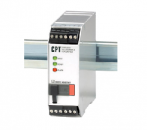 The CPT is one of the versatile products offered by Moore Industries, serving as both a PC-Programmable temperature transmitter and a signal isolator/converter. If you need to monitor temperature using a Type J Thermocouple and provide two temperature-related outputs:
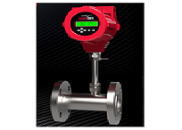 Traditional thermal sensors have two sensors, one temperature sensor and one velocity sensor, each in a separate probe sheath.
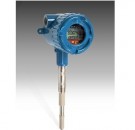 The new Universal IV™ CM Model Water Cut Monitor from AMETEK Drexelbrook has all of the advantages of its predecessor –the Drexelbrook CM-6 Cut Monitor--along with several key performance improvements. These include superior water cut measurement accuracy in the low ranges (0 – 1%, 0-5% and 0-10% water). Accuracy is 0.03 % water and measurement resolution is down to 0.0002 % water.