 ABB will supply Robins & Morton, the Alabama-based construction and engineering company, a plant automation system for Louisiana Energy and Power Authority's (LEPA) new gas-fired power plant in Morgan City, Louisiana.
The plant will produce 64 megawatts of electric power for six of the 17 municipalities in southern Louisiana that own LEPA. Scheduled for completion in late 2015, the plant will supply competitively priced electricity that will reduce the municipalities' reliance on more costly supply options. This will be LEPA's first power generation facility, and one of several new power plants currently under construction in the United States that are fueled by natural gas extracted from shale formations (also known as shale gas).
It is also in line with the current trend of generating power through smaller, distributed power generation plants which are located closer to the demand like municipalities, end-users.
ABB was selected by Robins & Morton for its ability to provide speedy and responsive consultancy during the bidding process, and to deliver on a fast-track basis a complete plant automation solution that is cost effective and low risk during project execution and that meets the end-user's requirements.
ABB is supplying a Symphony® Plus total plant automation system that will control, manage and optimize the entire production process at the Morgan City plant. The solution includes a wide variety of Symphony Plus products including plant performance monitoring, vibration monitoring, simulation and ABB's new SD Series of robust, energy-efficient input/output (I/O) modules. ABB is also responsible for design, engineering, installation and commissioning of the automation system, and will provide LEPA with operator and engineer training and life cycle service support. ABB was also awarded two separate contracts to supply plant electrical equipment.
"We are delighted to be working with Robins & Morton on this, our first project together in the United States," says Massimo Danieli, Managing Director of ABB's Power Generation business, a part of the company's Power Systems division. "Our vast experience of providing electrical and automation systems for gas-fired power plants in North America makes ABB the ideal partner for power plant projects fueled by natural gas."
ABB has developed standardized/containerized solutions for distributed power supporting fast track execution with low risk profile. Thanks to the recent boom in shale gas production, natural gas has become the predominant fuel for new power plant projects in the United States. More than half of new power generation plants built in the United States in 2013 were fueled by natural gas. ABB has a huge installed base of automation systems in combined cycle and open cycle gas-fired power plants all over North America.
Symphony Plus is ABB's automation platform for the power generation and water industries. It is designed to meet the requirements of engineering, procurement and construction contractors in the power and water sectors, and of plant owners in all geographic markets and in all types of power generation and water treatment. There are now more than 6,500 Symphony DCS installations in operation all over the world, with more than 4,500 in power and water applications.
Air Jordan Shoes Men

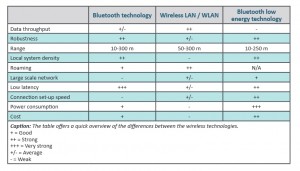 Wireless communication in tough, demanding applications is nothing new. Wireless has been used for more than 30 years through the use of proprietary radios. However, with the modernization of industrial networks and the emergence of different Ethernet protocols, there has been an increasing demand for standardized wireless technologies. During the last 10 years, standards like Wireless LAN (IEEE 802.11) and Bluetooth technology (IEEE 802.15.1) have become the dominating wireless technologies. In 2011, Bluetooth low energy technology also entered the scene. This whitepaper compares the wireless technologies available so you can find the solution that fits your application the best.
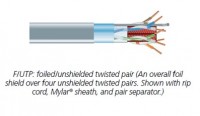 One of the most obvious advantages copper offers is that it is less expensive than fiber cable and much easier to terminate in the field. The type of cable you choose depends on the environment and application.
 Moxa is pleased to announce that our new mobile app “IES Padbook” is now ready for download. The IES padbook is a brochure app that allows readers to access Moxa’s latest industrial Ethernet solutions, demo videos, white papers, success stories, and much more. It is available for both Apple iPads and Android tablets(2560x1600). Download "IES Padbook" now to extend your mobile browsing experience.
 Yokogawa Electric Corporation announces that its affiliate, Yokogawa Kontrol (Malaysia), has received an order from a consortium comprising JGC Corporation (Japan) and Samsung Heavy Industries (South Korea) that will supply control systems and safety instrumented systems for PETRONAS's second floating liquefied natural gas (FLNG) facility, PFLNG2.
 Whether you need fast and flexible project management or help getting the most out of your existing assets, the expertise and innovation you’ll find at our 2015 Global Automation Conference is designed to help you prepare for the future while protecting your plant.
 National Instruments, the provider of platform-based systems that enable engineers and scientists to solve the world’s greatest engineering challenges, today announced the new CompactDAQ 8-slot controller, which expands the CompactDAQ controller offering to meet high-channel count applications in rugged environments. By integrating the processor, signal conditioning and I/O into a single CompactDAQ system, engineers can reduce overall system cost and complexity while increasing measurement accuracy. Integrated measurement systems reduce the number of components, connections and wiring needed, which often introduce noise and additional costs, to ensure high-accuracy measurements and cost-optimized systems.
 The Certified Functional Safety Expert (CFSE) Program has introduced new ICS cybersecurity personnel certification specialties: The Certified Automation Cybersecurity Expert (CACE) and Certified Automation Cybersecurity Specialist (CACS). These have been developed in response to the growing demand to secure industrial automation control systems (IACS) and SCADA systems by providing a means for people to develop and demonstrate competence by understanding and applying security standards such as IEC 62443/ISA-99, as well as best practices.