
 When building a machine, skid or industrial application, engineers often re-use IP addresses. Network address translation (NAT) is a methodology that enables this without introducing a duplicate IP address error into the plantwide architecture. A new white paper from Cisco and Rockwell Automation, “Deploying Network Address Translation within a Converged Plantwide Ethernet Architecture,” provides guidance and validated architecture designs to help engineers deploy NAT for one machine or skid, or for an entire cell or area zone in a plant.
Manufacturers benefit from NAT when the IP address space within the plantwide network infrastructure is limited and not every device needs to communicate outside the skid or machine-level network. Meanwhile, OEMs can leverage NAT to more quickly replicate skids and machines.
The white paper summarizes key design principles from a comprehensive design and implementation guide on NAT.
Download White Paper
รองเท้าวิ่ง
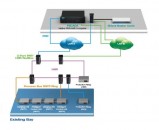 In this paper, Moxa examine existing substation topologies and possible integral and scalable methods to achieve efficient redundancy with PRP (parallel redundancy protocol) and HSR (high-availability seamless redundancy). An optimized IEC 61850 PRP/HSR architecture should provide scalable integration for easy modification of functionalities and extension of the substation. Upgrading SANs (single attached nodes) and DANs (dual attached nodes) to a PRP/HSR network will require an efficient and cost effective solution in order to construct a seamless/bumpless communication infrastructure to ensure maximum system availability.
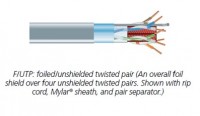 One of the most obvious advantages copper offers is that it is less expensive than fiber cable and much easier to terminate in the field. The type of cable you choose depends on the environment and application.
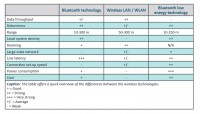 Wireless communication in tough, demanding applications is nothing new. Wireless has been used for more than 30 years through the use of proprietary radios. However, with the modernization of industrial networks and the emergence of different Ethernet protocols, there has been an increasing demand for standardized wireless technologies. During the last 10 years, standards like Wireless LAN (IEEE 802.11) and Bluetooth technology (IEEE 802.15.1) have become the dominating wireless technologies. In 2011, Bluetooth low energy technology also entered the scene. This whitepaper compares the wireless technologies available so you can find the solution that fits your application the best.
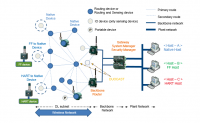 One of the international wireless standards for industrial use, ISA10 0.11a, was first established in 2009. Since then, wireless has been introduced into many industrial areas, and the recognition of industrial wireless technology has continued to grow as application examples increase. Nowadays, the use of wireless is spreading further, and various types of sensors are beginning to be required. Even for existing systems using wired communications, wireless technology is considered as a communication means to collect information from already installed field devices, for example, diagnostic information concerning the devices.