
 Siemens is launching a new software tool on the market for the design and simulation of Profinet automation networks. The Sinetplan network planner from Siemens is aimed at plant designers, constructors and operators and supports them from the planning stage, through commissioning to the operation of a Profinet communication network. In order to ensure subsequent operational reliability and to avoid problems during commissioning, the network is already designed with a suitable topological structure at the planning stage and any possible bottlenecks caused by peak loads, for example, are simulated. In the operating phase, Sinetplan offers transparency about the network capacity up to the port level of the individual stations by means of online scans, traffic shapers or reporting functions. This prevents unnecessary downtimes due to network overload and thus increases the availability of the network and the production.
Sinetplan is used in particular for the planning and operation of Profinet networks that use acyclic data services such as TCP/IP in addition to cyclic real-time communication. Projects already planned in Step 7 are easy to import, and existing systems are scanned online, verified and simulated.
Faulty design or overloading of a Profinet network can compromise the overall application and, in the worst-case scenario, result in loss of production. Using the Sinetplan network planner it is possible to check the operational reliability of a Profinet network while it is still in the planning phase and find out whether a network is topologically suitable, what reserves the selected topological design offers and how you can protect the network against unforeseen peak loads (bursts). To do this, the tool calculates the loading on the network caused by the time-critical Profinet I/O data traffic as well as the acyclic, TCP/IP-based data traffic, e.g. from remotely operated servers, cameras, PCs or web server accessing. Depending on the topology and the connected network stations, the network loads are simulated, highlighting any critical points where network loading is too high. For example, worst-case queue occupancy of the ports and of the connections is calculated in this process. The network topology can then be replanned and a simulation restarted with minimum effort, and the result of the calculation and simulation can be stored in a detailed report.
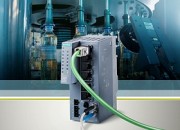 Siemens is currently launching Scalance XC-100, a new line of compact switches. Users can establish electrical and optical line and star structures for machine-level networking in the Simatic environment. The switches are characterized by their high number of ports and interfaces, a rugged housing, an extended temperature range of -40 to +70° C as well as approval for hazardous areas (ATEX Zone 2, IECEx). This makes them suitable for deployment in a wide range of environments where conditions may sometimes be harsh, such as in series machine construction, shipbuilding, transportation, and in the oil and gas industry. For example, users can integrate communication modules of a series machine with a data rate of up to 100 Mbit/s into a production network.
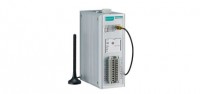 The ioLogik 2500 is a smart remote I/O product with unique hardware and software designs, making it an ideal solution for a variety of industrial data acquisition applications. The ioLogik 2500’s hardware design includes a 4-port unmanaged Ethernet switch and 2 serial ports, enabling the ioLogik 2500 to seamlessly connect to a variety of field devices. One of the Ethernet ports can be used to link to 8 daisy-chained ioLogik E1200 expansion modules to provide more than 100 channels. The ioLogik 2500 acts as the “head” unit, with Click&Go Plus logic used to control the entire I/O array. Most importantly, the ioLogik 2500’s single IP is all that’s required to connect the entire I/O array to your network, providing the perfect solution for industrial field sites that have an insufficient number of IP addresses.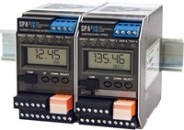
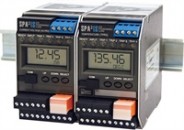 Moore Industries has released the new SPA2IS programmable alarm trips with built-in intrinsically-safe (IS) field connections. Now customers in the chemical, petrochemical, oil & gas extraction & refining and pharmaceutical industries that monitor, control, and measure signals in hazardous areas have an alarm solution that significantly reduces wiring, installation and maintenance costs. The newest member of Moore Industries' family of Limit Alarm Trips and Switches, the SPA2IS is a combination alarm trip and temperature transmitter solution that includes built-in intrinsically-safe field connections for current/voltage, resistance temperature detectors (RTDs), and thermocouple.
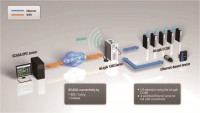 The Moxa ioLogik 1300 series remote I/O units are designed for wireless expansion and include a selection of GPRS and HSPA models to provide your choice of wireless connectivity. For I/O expansion, each ioLogik 1300 series has a designated port to support daisy chain topologies with up to eight additional ioLogik E1200 series I/O devices. Traditionally, remote I/O is ommunicated using a server pull architecture, where I/O units are passive devices that must be polled for data by the central control system; however, the ioLogik 1300 series comes equipped with Moxa’s MX-AOPC UA Server, which enables not only active reporting and alarming by the remote I/O unit, but additionally can restore any data that may have been lost due to intermittent communications failures.